Follow istudy_uk on Twitter

Content on this page requires a newer version of Adobe Flash Player.

Get Adobe Flash player

Content on this page requires a newer version of Adobe Flash Player.

Get Adobe Flash player

Content on this page requires a newer version of Adobe Flash Player.

Get Adobe Flash player

Content on this page requires a newer version of Adobe Flash Player.

Get Adobe Flash player

Demand Curves

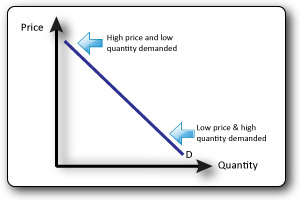
  • Individual demand is how much of a product a consumer will buy at a given price.
  • Market demand is the sum of all the indivudual demand for a product at a given price.
  • Demand is based on the actual ability of consumers to purchase the product, not just what they would like but cant afford (sports car, jewellery etc). This is called effective demand.
  • Demand curves slope down from left to right - this is because the higher the price the more of a consumers income must be spent on it & the more satisfaction they must get from it to justify the opportunity cost.

Content on this page requires a newer version of Adobe Flash Player.

Get Adobe Flash player

Movement along the Demand Curve (Price)

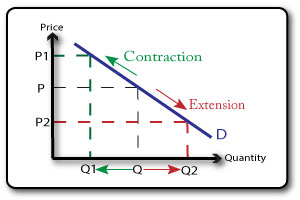
A change in price causes a movement along the curve

  • The higher the price of a product, the less demand for it there will be.
  • If the price rises then demand will fall, this is known as an contraction in demand.
  • The lower the pice of a product the more it will be demanded.
  • If the price falls then demand will rise, this is known as an expansion in demand.

Shift of the Demand Curve

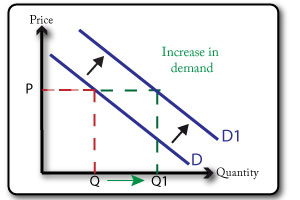
A shift of the demand curve represents an increase or decrease of demand at a given price level. This may be because of:

  • a change in consumers incomes
  • a change in price of competing products
  • changes in tastes/fashion
  • seasonal factors such as weather

Content on this page requires a newer version of Adobe Flash Player.

Get Adobe Flash player

Content on this page requires a newer version of Adobe Flash Player.

Get Adobe Flash player

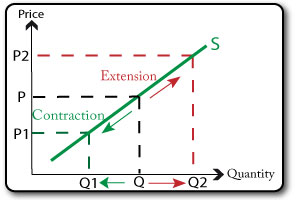
Movement along the Supply Curve (Price)

A change in price causes a movement along the curve

  • The higher the price of a product, the more suppliers will produce..
  • If the price rises then supply will rise, this is known as an expansion in supply.
  • The lower the pice of a product the less will be supplied.
  • If the price falls then supply will fall, this is known as an contraction in supply.

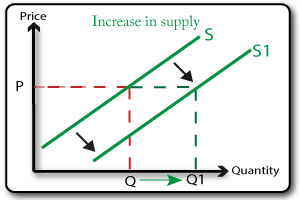
Shift of the Supply Curve

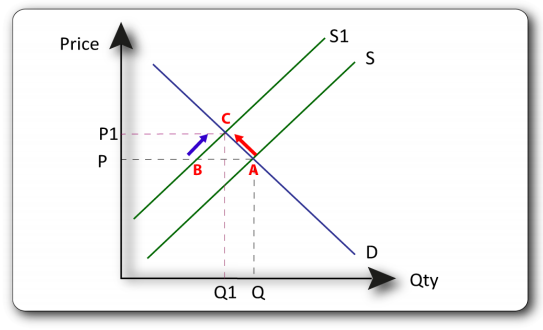
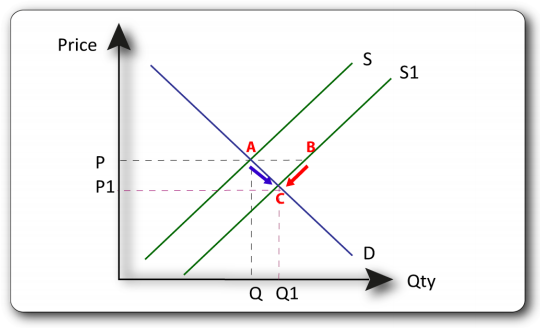
A shift of the supply curve represents an increase or decrease in the quantitiy supplied at each & every price. Several factors that can cause a shift in supply:

  • Improvements in technology (can increase efficiency & reduce costs).
  • Weather, climate and disease (especially agricultural products).
  • Taxes and subsidies can make the costs of production more/less expensive and therefor increase or decrease supply.
  • Natural disasters & wars can severly disrupt supply.
  • Resources: discoveries of new resources or depleting reserves of resources can affect the supply of products.

Content on this page requires a newer version of Adobe Flash Player.

Get Adobe Flash player

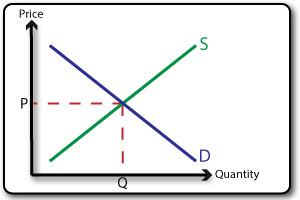
Equilibrium

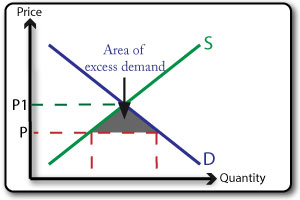
The equilibrium price or market clearing price is the point at which demand and supply are equal (where they cross on the diagram).

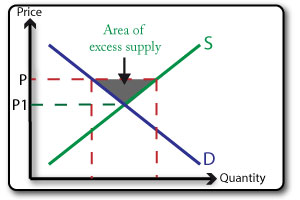
Consumers want low prices & suppliers want higher prices, this leads to adjustments in the price of products until the equilibrium point is reached.

Content on this page requires a newer version of Adobe Flash Player.

Get Adobe Flash player

Content on this page requires a newer version of Adobe Flash Player.

Get Adobe Flash player

Content on this page requires a newer version of Adobe Flash Player.

Get Adobe Flash player

Content on this page requires a newer version of Adobe Flash Player.

Get Adobe Flash player

Content on this page requires a newer version of Adobe Flash Player.

Get Adobe Flash player